Cara Mengatasi Wasir Agar Tidak Kambuh__Sering mendengar atau bahkan mengalami gangguan penyakit wasir atau ambeien, sebenarnya apa itu penyakit wasir atau ambeien lalu bagaimana cara pengobatannya? adakah pengobatan yang aman dan terbukti manjur? apa obat wasir atau ambeien yang terbukti berkhasiat mengobati penyakit wasir atau ambeien
 Cara Mengatasi Wasir Agar Tidak Kambuh__CARA MENYEMBUHKAN WASIR
Apa itu Wasir ?
Wasir memang merupakan penyakit yang cukup sering mengganggu kegiatan maupun aktivitas manusia seperti halnya kesulitan saat duduk ataupun berdiri, bahkan terasa nyeri di sekitar anus ketika melakukan sejumlah aktivitas-aktivitas tertentu.
Maka, kali ini kita akan membahas beberapa cara menyembuhkan wasir. Untuk penyebab wasir mungkin sebagian besar sudah mengetahui apa penyebab wasir tersebut.
Maka kita langsung saja membahas bagaimana cara menyembuhkan wasir pada umumnya tanpa memerlukan biaya yang terlalu besar juga tanpa menimbulkan rasa sakit seperti halnya operasi.
1.Hal yang pertama dilakukan jika sudah mengetahui gejala-gejala wasir adalah berendam ke dalam air hangat sebanyak beberapa kali sehari, khususnya setelah buang ar besar sekitar 15 menit kemudian
2.Memberikan salep atau krim atau minyak yang khusus untuk mengobati hemarroid atau ambeien atau wasir tersebut guna mengurangi rasa sakit atau bahkan menyembuhkannya.
Memang wasir sering disebabkan oleh kesalahan-kesalahan saat melakukan kegiatan-kegiatan tertentu dan kebanyakan dari mereka adalah wanita. Mengapa? Karena wanita biasanya terkena wasir pada saat mereka hamil. Masa kehamilan meriupakan masa yang cukup beresiko bahkan kemungkinan wanita terkena wasir saat hamil pun semakin besar.
Mengapa? Karena wasir ditimbulkan akibat gesekan-gesekan atau tekanan yang terjadi antara dinding rahim dan saluran pencernaan, semakin berumur masa kehamilan semakin besar pula janin yang dikandungnya dan tekanan pembuluh vena yang terjadi di daerah saluran pencernaan pun semakin besar. Ada juga yang mengalami wasir ketika masa persalinan karena adanya tekanan bayi yang begitu kuat sehingga menyebabkan wasir.
Untuk itu, ada beberapa cara menyembuhkan wasir secara tradisional kepada wanita yang hamil.
1.Mennggunakan campuran daun iler dan temulawak dimana daun iler sebanyak 7 lembar dan temulawak sebanyak 2 ruas ibu jari. Kemudian direbus dalaam 2 gelas air dan tersisa 1 gelas air. Hasil rebusan tersebut diminum sebanyak 2 kali sehari dan tiap kali minum sebanyak setengah gelasnya.
2.Menggunakan campuran daun ungu, temulawak, dan air. Daun ungu yang digunakan adalah sebanyak 7 lembar, temulawak sebanya k2 ruas ibu jari dan air sebanyak 2 gelas lalu direbus dari 2 gelas hingga 1 gelas dan diminum sebanyak 2 kali sehari dan tiap kali minum sebanyak setengah gelas.
3.Menggunakan campuran daun patikan kebo sebanyak 1/3 gram, kunyi sebanya 2 ruas jari, serta gula enau sesuai selera. Semua bahan tersebut dicampur dan direbus hingga menyusut setengahnya dari 2 gelas menjadi 1 gelaS. Hasil rebusan diminum sebanyak 2 kali sehari dan tiap kali minum sebanyak setengah gelasnya.
Ada juga cara menyembuhkan wasir dengan menggunakan obat luar, namun jenis wasir ataui ambeien yang dapat diatasi adalah jenis wasir eksterna dimana wasir tersebut berada di luar atau di bibir anus sehingga tampak oleh mata. Untuk wasir interna, tidak diperlukan cara menyembuhkan wasir yang satu ini, cukup menggunakan cara penyembuhan melalui dalam saja dengan kapsul Ambejos
Berikut ini adalah beberapa cara menyembuhkan wasir melalui luar.
1.Mengoleskan salep salwa, namun ingat obat luar tersebut bisa digunakan selayaknya dan sesuai dengan anjuran tertentu.
2.Mengompres bagian yang sakit dengan menggunakan air dingin.
3.Pijat refleksi juga dapat membantu dalam mengatasi konstipasi atau sembelit.
Pengobatan Ambeien atau Wasir
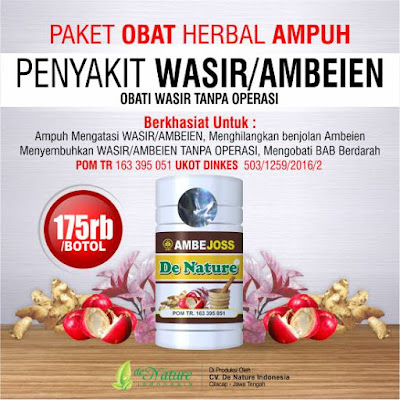
Cara Mengatasi Wasir Agar Tidak Kambuh__Ambejoss obat Ambeien atau wasir, obat alami berkhasiat dalam bentuk kapsul yang berasal dari tanaman herbal seperti daun ungu, mahkota dewa dan kunyit putih, diberikan pada penderita jika penyakit masih dalam tingkatan stadium ringan. Kapsul ini biasanya dikemas dalam jumlah sebanyak 50 kapsul.

Cara Menghilangkan Benjolan Wasir Tanpa Operasi pengobatan alami untuk wasir ambeien yang manjur dan paten untuk bab berdarah benjolan hilang Obat wasir tidak berdarah tanpa efek samping padaazepamnorxpadaazepamnorxobat wasir tidak berdarah tanpa efek samping menit yang lalu Obat wasir tidak berdarah tanpa efek samping Wasir atau yang biasa kita kenal melihat ada darah yang ikut keluar, rasa gatal pada dubur, munculnya benjolan, bisa Bisa dengan operasi, tembak laser dan sebagainyaHasil TelusurObat wasir yang sudah berdarah ampuh padaazepamnorxpadaazepamnorxobat wasir yang sudah berdarah ampuh jam yang lalu Baca juga : Obat wasir yang sudah berdarah tanpa efek samping Keluarnya benjolan yang mengganjal pada anus, saat buang air besar Berikut beberapa cara mengatasi ambeien secara alami yang bisa anda lakukan :Obat salep wasir berdarah cepat sembuh padaazepamnorxpadaazepamnorxobat salep wasir berdarah cepat sembuh jam yang lalu Untuk mendapatkan Obat herbal AmbeJOSS De Nature dan Salep Salwa, tindakan operasi pengangkatan wasir yang bisa memberi efek samping yang terkadang tidak baik Namun benjolan itu bisa masuk dengan senpadarinya untuk padagunakan, tanpa ada efek samping yang negatif bagi tubuh kitaCara Mengobati Benjolan Wasir Tanpa Operasi Wasiridhbbtclbycara mengobati benjolan wasir tanpa operasi Cara Mengobati Benjolan Wasir Tanpa Operasi obat wasir dan ambeien paling ampuh, mengobati benjolan pada dubur atau anus pada hemoroid stapadaum dan Cara Mengobati Benjolan Wasir tanpa operasi MusikuPWmusikupw Youtube Nov Download Music and Video Cara Mengobati Benjolan Wasir Cara Mengobati Benjolan Wasir tanpa operasi All Files Source
Obat Wasir Herbal Ambejoss dan Salep Salwa__Jika penyakit ini sudah termasuk dalam tingkatan stadium yang lebih tinggi maka pengobatan sebaiknya di lakukan dari dalam dan dari luar. kami juga menyediakan obat dalam bentuk salep (Salep wasir SALWA) yang terbuat dari bahan alami seperti minyak zaitun, propolis murni, binahong dan sirih merah.Ambejoss + Salep SALWA solusi tepat untuk mengobati panyakit ambeien atau wasir dari dalam dan luar untuk penyakit wasir stadium II s/d stadium IV

Penyakit Ambeien atau wasir yang tidak segera disembuhkan dikhawatirkan akan menyebabkan gejala semakin parah, dimana akan terdapat benjolan semakin membesar di dalam anus. Jadi tunggu apalagi jika anda atau ada kenalan anda yang mengidap penyakit Ambeyen, segeralah di obati
Paket Hemat Obat Wasir
Seperti Layaknya obat herbal, obat herbal wasir tidak bisa bekerja secara instant akan tetapi secara perlahan namun pasti dalam pengobatannya apalagi untuk kasus wasir yang sudah stadium lanjut ( III – IV ). Dari pengalaman beberapa pasien yang sudah terkena wasir stadium lanjut, mereka membutuhkan lebih dari 1 paket untuk penyembuhannya. Untuk itu kami menyediakan beberapa paket hemat yang bisa anda pilih untuk menghemat biaya obat dan biaya kirim.
Cara Menghilangkan Benjolan Wasir Tanpa Operasi pengobatan alami untuk wasir ambeien yang manjur dan paten untuk bab berdarah benjolan hilang Obat wasir tidak berdarah tanpa efek samping padaazepamnorxpadaazepamnorxobat wasir tidak berdarah tanpa efek samping menit yang lalu Obat wasir tidak berdarah tanpa efek samping Wasir atau yang biasa kita kenal melihat ada darah yang ikut keluar, rasa gatal pada dubur, munculnya benjolan, bisa Bisa dengan operasi, tembak laser dan sebagainyaHasil TelusurObat wasir yang sudah berdarah ampuh padaazepamnorxpadaazepamnorxobat wasir yang sudah berdarah ampuh jam yang lalu Baca juga : Obat wasir yang sudah berdarah tanpa efek samping Keluarnya benjolan yang mengganjal pada anus, saat buang air besar Berikut beberapa cara mengatasi ambeien secara alami yang bisa anda lakukan :Obat salep wasir berdarah cepat sembuh padaazepamnorxpadaazepamnorxobat salep wasir berdarah cepat sembuh jam yang lalu Untuk mendapatkan Obat herbal AmbeJOSS De Nature dan Salep Salwa, tindakan operasi pengangkatan wasir yang bisa memberi efek samping yang terkadang tidak baik Namun benjolan itu bisa masuk dengan senpadarinya untuk padagunakan, tanpa ada efek samping yang negatif bagi tubuh kitaCara Mengobati Benjolan Wasir Tanpa Operasi Wasiridhbbtclbycara mengobati benjolan wasir tanpa operasi Cara Mengobati Benjolan Wasir Tanpa Operasi obat wasir dan ambeien paling ampuh, mengobati benjolan pada dubur atau anus pada hemoroid stapadaum dan Cara Mengobati Benjolan Wasir tanpa operasi MusikuPWmusikupw Youtube Nov Download Music and Video Cara Mengobati Benjolan Wasir Cara Mengobati Benjolan Wasir tanpa operasi All Files Source

Cara Mengobati Ambeien Luar Tanpa Operasi Penyakit wasir biasanya tidak berbahaya atau tidak mengancam nyawa, namun perlu padaketahui bahwa secara Cara Mengobati Ambeien Luar Bengkak Parah ScribdscribddocCara Mengobati Ambeien Luar Bengkak ParahCara Mengobati Ambeien Luar Bengkak Parah, Cara Mengobati Wasir Dengan Salep Salwa untuk mengobati penyakit wasir ambeien hemoroid bab Cara Mengobati Ambeien Luar Secara Alami caramengobatiambeiencaramengobatiambeienjimdocara mengobati ambeien luar secara alam Sep Cara Mengobati Ambeien Luar Secara Alami adalah obat herbal yang terbuat dari tanaman alami yang terbukti berkhasiat mengobati ambeien Cara Mengobati Ambeien Luar Obat Kutil Kelaminobatkutilkelaminampuhnetcara mengobati ambeien luar Okt Cara Mengobati Ambeien Luar Ambeien bisa mengalami peradangan, menyebabkan terbentuknya bekuan darah (trombus), perdarahan Cara Mengatasi Wasir Secara AlamicaramengatasiwasirTips Cara Mengatasi Wasir Secara Alami Tanpa Operasi untuk Pengobatan Wasir Dalam, Wasir Luar dan Wasir BerdarahCara Mengobati Ambeien Luar bjinfobjinfocategorycara mengobati ambeien luar
Perlu anda ketahui bahwa semua produk Denature telah terdaftar di BPOM dan sudah meraih ISO 9001-2015 serta pabrik kami sudah diakui sebagai yang terbaik untuk wilayah Jawa Tengah


UNTUK KONSULTASI DAN PEMESANAN SILAHKAN KLIK


KELEBIHAN BELANJA ONLINE PADA KAMI (DE NATURE INDONESIA)
- Setiap penyakit berbeda obatnya, jd obat kami khusus untuk penyakit itu sendiri!
- Harga lebih murah
- Kualitas terbaik
- Tanpa perlu pergi ke dokter (tidak malu saat ke dokter, hemat waktu, dll)
- Tidak perlu disuntik
- Masa penyembuhannya relatif singkat
- Proses pengiriman cepat dan aman
- Hanya kami yang selalu mengutamakan ke puasan konsumen
Cara Pemesananan / Pembelian :
Konfirmasi pembayaran melalui SMS ke 082328384494. Barang akan dikirim jika transfer sudah diterima. Silahkan melakukan pembayaran melalui transfer via rekening yang akan kami infokan via WA/SMS
Contoh Konfirmasi Pembayaran
Contoh : Dani Saputra # Jl.Garuda No 2546 Kemayoran Jakarta Pusat # 085 869 978 978 # 1 Paket Obat Sipilis/kencing nanah # Sudah Transfer Rp.295.000 Via Bca An.Sugeng
Kirim via SMS ke 082328384494
Catatan: Barang akan dikirim jika transfer sudah diterima. Silahkan melakukan pembayaran melalui transfer via bank di bawah ini
Catatan: Barang akan dikirim jika transfer sudah diterima. Silahkan melakukan pembayaran melalui transfer via bank di bawah ini
Pengiriman

Obat kami jamin sampai ditujuan dengan aman. Jika memang tidak sampai, kami akan mengembalikan uang 100%
Kami Memberikan Jaminan

BUKTI RESI PENGIRIMAN
Dijamin Barang Sampai Tujuan

Melayani Pengiriman
Keseluruh Dalam Negeri Maupun Luar Negeri
Packing Rapi Dan Aman


SEPARAH APAPUN PENYAKIT YANG ANDA DERITA DAPAT DISEMBUHKAN JIKA ANDA MAU BERUSAHA MENGOBATINYA!!
Call/Sms/WA
KONTAK KAMI
082328384494 / 7A68E8B4
(Layanan Konsultasi dan Pemesanan 24 jam)


